

Exchange currency AUD to Chinese Yuan RMB

Our rates

Find branch

FAQs
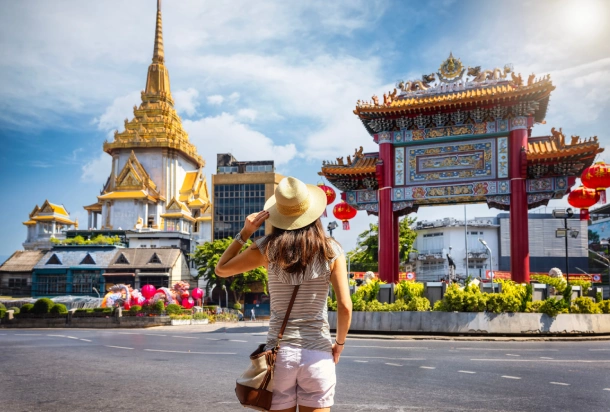
Plan your trip to China efficiently
China is one of the most cashless countries in the world, yet it is also one of the places where visitors most often get stuck at the till. Locals pay almost everything by scanning a QR code with Alipay or WeChat Pay, and international cards are accepted far less widely than in Australia. Arriving with some yuan in cash and a payment app set up before you fly is the safest way to travel.
Order your yuan online, pay when you collect them from a Prosegur Change branch, and pay 0% commission on the exchange. Check today's rate on our exchange rates page.
China currency at a glance
|
|
|---|---|
|
Name |
Renminbi; the unit is the yuan |
|
ISO Code |
CNY |
|
Symbol |
¥ |
|
Notes |
¥1, 5, 10, 20, 50, 100 |
|
Coins |
1 jiao, 5 jiao, ¥1 |
|
|
|---|---|
|
Cash Index |
30% – Mixed |
|
Other currencies accepted |
None |
|
Tips |
Not customary, except for private guides and drivers on tours. |
Everyday prices in Beijing

Latte in a chain café
¥20 to 30

Forbidden City
¥60 from April to October, ¥40 from November to March

Subway ride
From ¥3, depending on distance

Dinner, mid-range
¥120 per person
Cash, cards and payment apps in China
Alipay and WeChat Pay now let visitors link an Australian Visa or Mastercard and pay like locals, in shops, taxis, metro gates and street stalls. Payments of ¥200 or less are fee-free; above that, a 3% service fee usually applies. Some Australian banks block the link at first, so set up the apps at home and run a small test payment before you leave.
Cash is your safety net. Chinese authorities require hotels, restaurants, retailers, public transport and taxis to accept cash, but many small vendors no longer keep change, so carry ¥20 and ¥50 notes rather than only ¥100s. Cash also covers temple donations, the odd fruit stall and the moment your phone battery dies. International cards work in large hotels and international chains, and at ATMs marked with Visa or Mastercard.
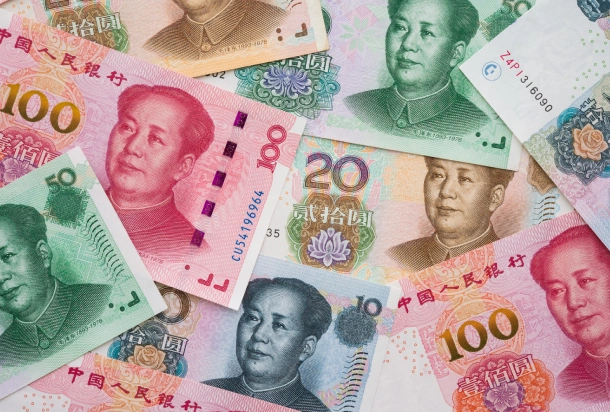

Before you fly to China
Australian passport holders can visit China without a visa for up to 30 days for tourism, business, family visits or transit. The current arrangement runs until 31 December 2026, so check the Chinese Embassy's advice if you travel in 2027. Each traveller can carry up to ¥20,000 in cash into or out of China.
The Forbidden City and many major museums sell tickets online only, seven days ahead at 8 pm Beijing time, and you'll need your passport number to book. Plan these first, then build the rest of your itinerary around them.
Top things to do in China
In Beijing, book the Forbidden City, then walk up Jingshan Park for the view over its golden roofs. The Temple of Heaven and the hutong lanes around Houhai fill a second day. Most travellers take a day for the Great Wall at Mutianyu, quieter than Badaling and with a toboggan down. Shanghai's Bund and Yu Garden, and the Terracotta Warriors near Xi'an, are a high-speed train ride away.

Your one-week budget for China
| Item | Estimate |
|---|---|
| Return flight, Melbourne to Beijing | A$900 to 1,500 |
| Accommodation, 6 nights mid-range hotel | ¥3,000 (about A$610) |
| Food and drinks | ¥1,400 (about A$285) |
| Activities | ¥600 (about A$120) |
| Local transport | ¥300 (about A$60) |
| Cash to take before you leave | ¥700 (about A$140) |
With a Cash Index of 30%, around ¥700 in mixed notes covers a week as a backup to Alipay or WeChat Pay. Collect your yuan at our Melbourne Airport branch before your flight, or at Brisbane Airport.

Ordering yuan with Prosegur Change
Choose your amount on our currency order page, pick a branch and a date, and pay when you collect. Our branches in Sydney, Melbourne, Perth and Adelaide also stock RMB. Continuing to Hong Kong? Hong Kong uses its own currency, the Hong Kong dollar, not the yuan. For mobile data, an international eSIM set up before you land makes it easier to use maps and payment apps.
Travelling soon?
Here's how to easily reserve your currencies online
 1. Choose your currency
Determine the amount of travel money you will need to enjoy your trip.
 2. Choose a date & a pick-up location
Collect your order from one of our exchange bureaus at major airports and city centre.
 3. Collect & pay
Pay upon pickup and enjoy
your trip.
FAQs about Chinese yuan
Yes. Renminbi is the name of the currency, the yuan is its unit, and CNY is its international code. Prices are written with ¥.
In big hotels and international chains, yes. For everyday purchases, link your card to Alipay or WeChat Pay and keep some yuan in cash.
Up to ¥20,000 per person without declaring it. Most visitors carry far less, often ¥500 to 1,000 for a week.
Not officially. Hong Kong uses the Hong Kong dollar and Macau the pataca, though some shops take yuan at their own rate.