

Exchange currency AUD to USD

Our rates

Find branch

FAQs

Order dollars before travelling to the US
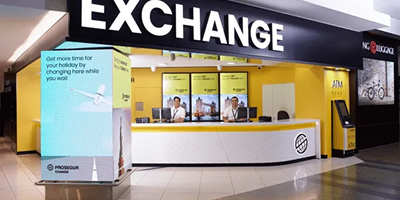
Order your US dollars online, pay when you collect, and pick them up from a Prosegur Change branch before you fly. There's 0% commission on USD orders, and the rate you see when you book is the rate you pay at the counter.
Most Australians heading to the US will pay for the bulk of their trip by card. Cash still matters for the moments cards don't cover well: tipping hotel staff, valet drivers and tour guides, small food trucks and market stalls, and the first taxi or coffee after a long-haul flight. Arriving with a few hundred dollars in the right notes saves you from airport kiosks and foreign ATM fees on day one.
US Currency Options
Cash
- Reserve online, pay & pickup at a branch
- Get our best exchange rates online
- 0% commission
- Collection available from the next day

Travel Money Card
- Pay online, in-store & use ATMs worldwide
- No fees on purchases abroad
- 10 currencies available
- 100% secured by Mastercard
US currency at a glance
|
|
|---|---|
|
Name |
US Dollar |
|
ISO Code |
USD |
|
Symbol |
US$ |
|
Notes |
US$1, 2, 5, 10, 20, 50 and 100 |
|
Coins |
1¢, 5¢, 10¢, 25¢, 50¢ and US$1 |
|
|
|---|---|
|
Cash Index |
20% |
|
Other currencies accepted |
None. |
|
Tips |
Yes, generally expected; 15–20% is common in restaurants and for many services. |
Everyday prices in New York

Cappuccino
US$6.50

The Met
US$30

Subway ride
US$3

Dinner, mid-range
US$60 per person, plus tax and tip
How to buy USD with Prosegur Change
Choose the amount of USD you need, then pick the branch and the date you want to collect. You pay on pickup, so nothing leaves your account until you have the notes in hand. Travellers flying out of Victoria or Queensland often collect at our Melbourne Airport or Brisbane Airport branches on the way to check-in. If you'd rather sort it during the week, our city branches in Sydney, Melbourne, Brisbane, Adelaide, Perth and Canberra hold US dollars too. The full list is on our branch finder.
Today's buy and sell prices for the US dollar sit alongside every other currency on our exchange rates page.


How much cash do you really need in the US?
Less than you might think for shopping, more than you might think for tips. Tipping in the US is part of how service workers are paid, not a bonus. At a sit-down restaurant, 18 to 20% of the bill is the norm, and a dollar or two per drink is expected at a bar. Hotel housekeeping is usually left US$2 to US$5 a night, and porters around US$2 a bag. You can add a tip on the card terminal in most restaurants, but housekeeping, valet and bag handling are almost always done in cash.
Two other habits catch Australians out. Displayed prices exclude sales tax, which is added at the till and varies by state and city, so a US$20 item rarely costs exactly US$20. And since the US Mint stopped producing the penny in November 2025, many shops now round cash totals to the nearest five cents. Pennies remain legal tender, but don't be surprised if your change skips them.
As a rough guide, a couple on a two-week trip who pay for meals and hotels by card will typically get through US$300 to US$500 in cash, most of it in tips and small purchases.
Travelling soon?
Here's how to easily reserve your currencies online
 1. Choose your currency
Determine the amount of travel money you will need to enjoy your trip.
 2. Choose a date & a pick-up location
Collect your order from one of our exchange bureaus at major airports and city centre.
 3. Collect & pay
Pay upon pickup and enjoy
your trip.

Which US notes are most useful?
The US$20 is the everyday note: it's what American ATMs dispense and what most cashiers expect. US$1 and US$5 notes are worth having in your wallet for tips, vending machines and street vendors. The US$100 is fine for hotels and larger purchases, but small businesses, petrol stations and some fast-food outlets refuse it outright, so don't arrive with only hundreds. The US$2 note is still legal tender but rarely seen, and the 50-cent and US$1 coins are uncommon in day-to-day change.
Paying by card in the US without the extra fees
Contactless payment is now standard in most US cities, and Visa and Mastercard are accepted almost everywhere. When a terminal or ATM offers to charge you in Australian dollars, decline and choose USD: that "convenience" conversion, known as dynamic currency conversion, is set by the merchant's provider and is usually worse than your own card's rate. At petrol stations, pumps often ask for a US ZIP code that an Australian card can't provide. The easy fix is to pay inside before filling up.
If you want to spend by card without touching your everyday bank account, the Travel Money Card holds US dollars as one of its 10 currencies. You lock in the exchange rate when you first load it, and you can top it up from the app during the trip. Many travellers carry both: the card for hotels and restaurants, cash for tips. For staying connected, our international eSIM has a dedicated United States plan, so you can avoid roaming charges from your Australian carrier.

Leftover US dollars after your trip
US dollars keep their usefulness better than most currencies, so many travellers simply hold on to them for the next trip. If you'd rather convert them back, you can sell your foreign currency at any of our branches and receive Australian dollars on the spot. Heading somewhere else next? Japan and New Zealand are the two destinations Australians most often combine with a US trip, and you can order Japanese yen or New Zealand dollars the same way.
FAQs about US Dollar (USD)
Here are some of the most common questions travellers ask before exchanging AUD to USD — from where to get the best rates to practical tips for managing money while in the United States.
It’s usually wise to sort at least some USD before you fly. Australia’s consumer regulator notes that foreign cash is typically more expensive at airports, and that shopping around online can secure better retail rates and lower fees.
Ordering ahead lets you enjoyr attractive rate and collect at the airport or city centre, avoiding last‑minute kiosk mark‑ups.
Rates move throughout the day. The simplest way to get a favourable rate is to check live updates and reserve your USD online. When paying by card in the US, always choose to be charged in USD (local currency) to avoid dynamic currency conversion (DCC) mark‑ups often added by overseas merchants or ATMs.
Budgets vary by city and travel style, but recent traveller data suggests:
- Budget travel: about USD 121 per person, per day (≈ USD 847 for a week).
- Mid‑range: about USD 325 per person, per day (≈ USD 2,275 for a week).
These figures include typical spending on accommodation, meals, local transport and sightseeing. Use them as a starting point and adjust for big‑city stays (e.g., NYC, SF), theme parks or road‑trip distances.
Carry both. Cards are widely accepted and dominate everyday payments: the Federal Reserve’s 2024 diary found cards accounted for about two‑thirds of transactions by number. Keep a small float of cash for tips, markets and occasional cash‑preferred venues.
Yes—tipping is customary. As a guide, 15–20% in restaurants (more for exceptional service), and small amounts for travel services (e.g., USD 2 per bag for porters). These are norms rather than strict rules, but planning for tips helps your budget.
ATMs are widespread in cities, airports and large retailers. Look for machines on the Visa/Plus or Mastercard/Cirrus networks. Most international ATMs expect a 4‑digit numeric PIN, and your home bank may charge overseas and operator fees—check these before you go.
Google and currency converters show the mid-market rate, the midpoint between what banks pay each other. No retail provider sells cash at that rate. What matters is the total amount of USD you receive for your Australian dollars, after commission. With Prosegur Change the commission is 0%, so the rate shown at booking is the whole cost.
There's no limit, but you must declare more than US$10,000 in cash or monetary instruments, in total per traveller or family group, when entering or leaving the US. Yo
Yes. Every US banknote design ever issued remains legal tender. In practice, some shops look twice at old-design US$100 notes, so newer notes are easier to spend.
In restaurants, bars and cafés, yes: the card terminal or the bill will have a tip line. For hotel housekeeping, porters, valet parking and many tour guides, cash is still the expected way to tip.
Yes. Hawaii is a US state, so it uses the US dollar and the same tipping and sales-tax habits apply.