Transport in Asia
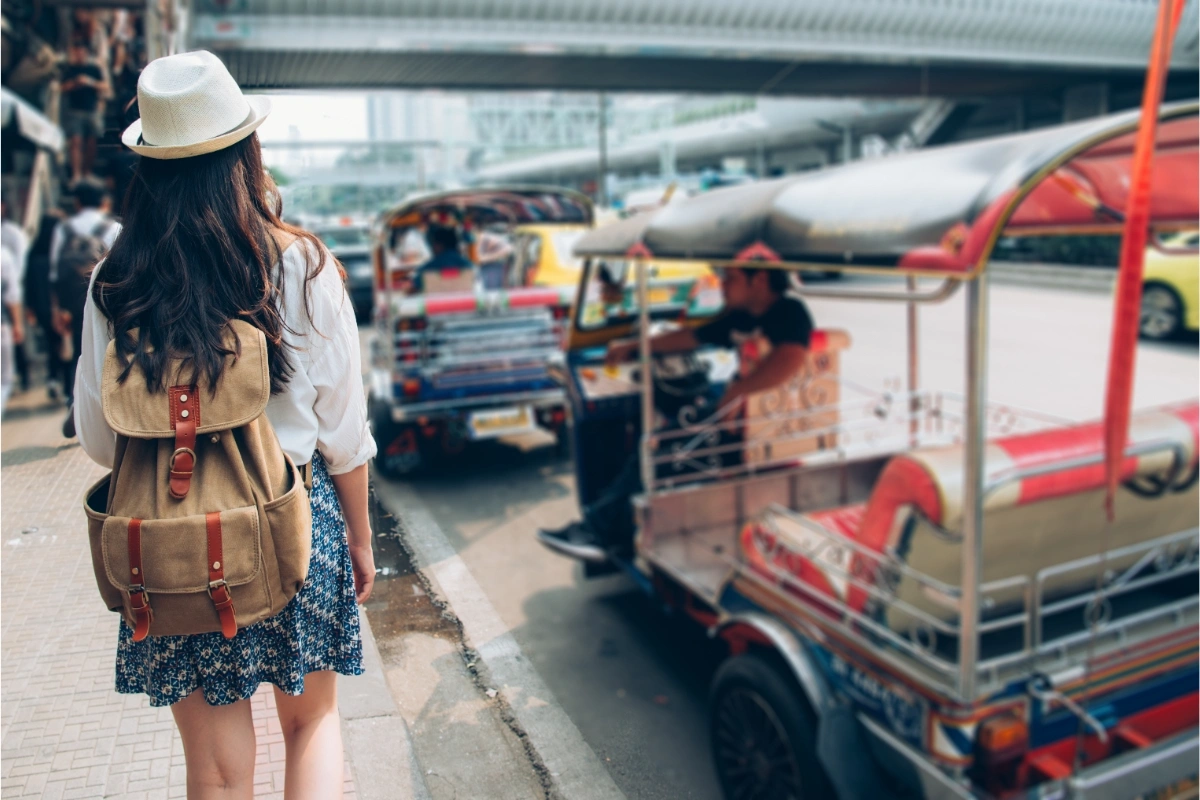
Table of contents:
Planning a trip to Thailand, Indonesia, Vietnam or anywhere else in Asia and looking for advice on the best ways to get around during your stay? You’ve come to the right place!
Asia is a fascinating region packed with incredible places to explore. However, transport options can sometimes feel overwhelming because there are just so many to choose from. Sleeper buses, scooters, tuk-tuks… In this guide, we’ll walk you through the best transport options for different situations, along with our top tips for travelling around as smoothly and stress-free as possible.
Key takeaways
- Long-distance travel: Planes, trains and sleeper buses are usually the best options depending on your budget, comfort expectations and available time. Flying is the fastest option, while buses are generally the cheapest.
- Short-distance travel: Scooters, bicycles, tuk-tuks and taxis are all great choices depending on the city or area you’re visiting. Scooters offer flexibility, taxis provide comfort, and bicycles deliver a more immersive experience.
- Affordable prices: Transport in Asia is generally very budget-friendly, with prices typically ranging from €1 to €30 depending on the transport type, distance and comfort level.
- Practical tips: Always check the condition of rental vehicles, wear a helmet, negotiate prices (especially with tuk-tuks), and book trains or flights in advance whenever possible.
- What to avoid depending on the situation: Avoid scooters in major cities, trains in countries with underdeveloped rail networks (such as Cambodia), and tuk-tuks for long journeys.
Sleeper buses
Buses are a relatively affordable way to cover long distances and are especially useful for travelling between major cities and popular tourist regions.
There are several reputable companies operating across Asia, and most allow you to book tickets online. Some buses offer surprisingly good comfort levels, including reclining seats, Wi-Fi and USB charging ports. This also explains why prices can vary quite a bit between operators.
Overall, sleeper buses are considered a safe and practical option for long-distance travel.
Prices
The cost of a sleeper bus ticket depends on the distance travelled and the level of comfort you choose.
Generally, expect to pay between AU$16 and AU$30 for a sleeper bus journey.
When to avoid them
Keep in mind that buses aren’t the best option if you’re short on time, as journey durations are heavily affected by traffic.
If you suffer from motion sickness, you may also want to avoid this option, as roads can be quite winding in some regions.
Tips
Be careful not to confuse sleeper buses with tourist minibuses. Minibuses are far less comfortable and not ideal for long-distance travel.
Trains
If your budget allows for a bit more comfort, trains are definitely worth considering. They’re generally more comfortable than buses and can cover long distances relatively quickly.
Some train routes are famous among travellers, such as the overnight sleeper train from Bangkok to Chiang Mai. Likewise, the journey from Hanoi to Ho Chi Minh City offers stunning views of the Vietnamese countryside, passing through places like Hue and Da Nang.
Prices
Train tickets usually cost between AU$8 and AU$50, depending on the distance and comfort class selected.
Whenever possible, avoid the very cheapest tickets for overnight journeys, as comfort levels can be quite poor.
When to avoid them
Countries such as Cambodia and Laos have less developed railway networks. Delays are common, so the experience may not always be ideal.
If you plan to travel by train, make sure to book your tickets in advance. While tourist booking platforms are convenient, official railway websites often offer better prices.
Tips
For overnight journeys, choose soft sleeper berths whenever possible. Although they’re slightly more expensive, the added comfort is well worth it.
Flying
Flying is a very practical option in Asia, especially for covering long distances quickly. Some remote destinations — such as Phu Quoc in Vietnam — are much easier to reach by plane. Travelling from Ho Chi Minh City to Hanoi, for example, takes around two hours by air compared to roughly 35 hours by train.
Prices
Flights generally cost between AU$30 and AU$160, depending on the distance, airline and how early you book.
Checked luggage is often not included in the cheapest fares and may cost an additional AU$16 to AU$30 per bag.
Don’t forget to factor in taxi fares to and from the airport when calculating the total cost of flying.
When to avoid it
For shorter journeys, flying isn’t always the most practical option. While flight times may be short, airport transfers, security checks and delays can quickly add extra travel time.
If you’re travelling with luggage, low-cost flights may also end up being less economical once baggage fees are added.
Tips
Use flight comparison websites to find the cheapest or fastest routes available.
Reserve your currency online
Enjoy the best exchange rates and 0% commission when booking your travel money online.
Renting a scooter or motorbike
Scooters are the preferred mode of transport for many locals and offer one of the most flexible and affordable ways to explore Asia. They allow you to travel independently, at your own pace, and reach more remote areas that are less accessible by public transport.
Exploring the rice fields around Pai in Thailand, the countryside near Hoi An in Vietnam, or riding around Nusa Penida in Indonesia is an unforgettable experience when you have your own scooter.
Prices
Scooter rentals are very cheap across Asia. Expect to pay around AU$6.50 to AU$13 per day, or roughly AU$40 to AU$65 per week for longer rentals.
Fuel is also inexpensive, with a full tank usually costing less than AU$3.
When to avoid them
In large cities such as Hanoi, Bangkok or Jakarta, traffic can be extremely hectic and dangerous for inexperienced riders.
Make sure you have an international driving permit and some riding experience before renting a motorbike. In the event of an accident, insurance may not cover you if you’re not properly licensed.
Tips
Always ask for a helmet when renting a scooter or motorbike.
Take the time to inspect the brakes and indicators, and photograph the vehicle before leaving.
It’s also best to refuel at proper petrol stations rather than buying fuel bottles sold roadside.
Tuk-tuks
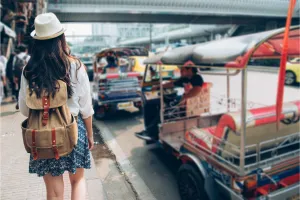
These iconic Asian vehicles are a fun and convenient way to travel short distances. They’re especially useful in tourist areas or pedestrian zones when you want to save time or avoid walking in the heat.
Prices
For a journey of around 10 to 15 minutes, expect to pay between AU$1.50 and AU$6.50. Prices are often inflated in tourist areas, so negotiating is essential.
When to avoid them
Tuk-tuks aren’t particularly comfortable, so they’re not ideal for long journeys.
If you’re looking for the cheapest option, taxis or rideshare services can sometimes offer better value and greater comfort.
Tips
Always agree on the fare before getting in. Drivers often quote significantly higher prices to tourists.
Reserve your currency online
Enjoy the best exchange rates and 0% commission when booking your travel money online.
Taxis and rideshare services are extremely popular in Asian cities, and finding a driver in tourist areas is usually very easy.
Several apps operate across Asia, including Grab, Bolt and Gojek. Similar to rideshare apps in Europe, they allow you to book drivers and see the fare in advance.
This is one of the best options for getting to your hotel from the airport or travelling longer distances around the city comfortably.
Prices
Expect to pay around AU$1.50 to AU$3.50 for the first 2–3 km, then approximately AU$0.50 to AU$0.80 for each additional kilometre.
Airport transfers into the city generally cost between AU$10 and AU$20.
Motorbike taxis are even cheaper, often costing between AU$0.80 and AU$2.50.
When to avoid them
In rural areas with limited internet coverage, using apps to find a driver can sometimes be difficult.
If you’re trying to keep costs down, other transport options may be more economical.
Tips
Download rideshare apps before arriving in Asia to avoid unnecessary stress.
It’s also best to avoid regular airport taxis, as they often charge inflated fares.
Bicycles
Renting a bicycle is a great option in quieter towns, rural areas and around historical sites.
Many hotels offer bicycle rentals in places like Hoi An in Vietnam or Don Det in Laos. Cycling around the temples of Angkor is also an unforgettable experience.
Prices
Bike rentals generally cost between AU$1.50 and AU$5 per day.
Some guesthouses even provide bicycles free of charge, so it’s worth asking when booking accommodation.
When to avoid them
In large, crowded cities, traffic is often too chaotic for comfortable cycling.
It’s also best to avoid cycling during extreme heat or in mountainous areas unless you’re well prepared.
Tips
Always wear a helmet when cycling and carry sunscreen with you.
As with scooters, check the brakes, tyres and seat condition before confirming the rental.
Reserve your currency online
Enjoy the best exchange rates and 0% commission when booking your travel money online.