

10 key facts about the Vietnamese Dong (VND)

Our rates

Find branch

FAQs
Vietnamese Dong (VND): Facts, Denominations, and AUD to VND Exchange Tips
Vietnam’s national currency is the Vietnamese Dong (VND), the essential unit for all commerce across the country.
As one of the highest-denominated currencies globally, understanding the VND’s structure—from its polymer security to the macro factors like export trade that influence its value—is key for making informed currency decisions.
Currency snapshot: At a glance
Instead of a standard list, use this reference table to understand the core mechanics of the VND before exploring the detailed facts.
| Feature | Details |
| Official Currency | Vietnamese Dong (VND), issued by the State Bank of Vietnam. |
| High Denominations | Banknotes range from 1,000 up to 500,000 VND. |
| Primary Material | Modern high-value notes use advanced polymer technology. |
| Exchange Strategy | Rates fluctuate daily; always compare the final "all-in" result. |
| Payment Logic | FJD for local vendors (cash); cards for major hotels and merchants. |
Essential insights into Vietnam's currency landscape
The following points break down the unique characteristics of the Vietnamese Dong, offering a technical look at its evolution, security, and market behavior.
Fact 1: The role of the Dong (VND)
The Vietnamese Dong (VND) is the official tender, represented by the symbol ₫. It is managed by the State Bank of Vietnam and is the primary unit used for retail, transport, and services nationwide.
Fact 2: Historical evolution
The Dong has evolved alongside Vietnam’s economic development, moving from earlier colonial-era systems to a standardized monetary framework that supports modern domestic trade.
Fact 3: High face value structure
The VND is notable for its high denominations. While smaller paper notes exist, common transactions typically involve 10,000 to 500,000 VND polymer notes.
Fact 4: AUD to VND exchange dynamics
The AUD to VND exchange rate is influenced by interest-rate expectations and regional trade flows. Because Australia is a key trade partner, shifts in the Australian economy can impact the relative demand for the Dong.
Fact 5: Advanced polymer technology
Vietnam uses polymer banknotes for high denominations. These are waterproof, durable in tropical climates, and incorporate sophisticated security features that make them harder to counterfeit.
Fact 6: Regional market liquidity
The VND is an actively traded currency in Southeast Asian FX markets. This liquidity ensures its availability through major FX providers for travellers exchanging AUD to VND.
Fact 7: The dominance of cash
While digital payments are growing in hubs like Hanoi, cash remains essential for local markets, street food, and transport. Carrying a variety of denominations is vital for daily convenience.
Fact 8: Tourism inflows and value
Tourism is a major source of foreign currency for Vietnam. Seasonal travel peaks can influence the short-term demand and volatility of the VND.
Fact 9: Central bank management
The State Bank of Vietnam oversees monetary policy to ensure financial stability and manages the issuance of currency to meet economic demand.
Fact 10: Statistical awareness
Exchange rates fluctuate based on macro conditions. Effective planning relies on checking live rates and comparing providers by the final amount received in local currency.
Planning your trip to Vietnam? Reserve your Vietnamese Dong (VND) online now to secure competitive rates and 0% commission before you fly.
Table of contents
- Currency snapshot: At a glance
- Essential insights into Vietnam's currency landscape
- The role of the Dong (VND)
- Historical evolution
- High face value structure
- AUD to VND exchange dynamics
- Advanced polymer technology
- Regional market liquidity
- The dominance of cash
- Tourism inflows and value
- Central bank management
- Statistical awareness
Quick Insights: your top Questions about the Vietnamese Dong (VND)
This section addresses the most common practical concerns regarding the use and exchange of the Dong, helping you navigate the local economy with confidence.
The high denominations reflect historical inflationary periods. Today, they are the standard unit for pricing; for example, 500,000 VND is the highest circulating note, worth approximately $30 AUD.
While some high-end hotels may accept foreign cards, most local transactions must be settled in VND. Paying in local currency ensures clearer pricing and better value than merchant-set exchange rates.
High-value polymer notes feature transparent windows with embossed designs, watermarks of President Ho Chi Minh, and color-shifting ink (OVI).
There is no upper limit, but you must declare any cash amount exceeding $5,000 USD (or equivalent in AUD) or 15,000,000 VND upon entry.
Since coins are defunct, many vendors round the final price up or down to the nearest banknote denomination (usually 1,000 VND) to simplify cash handling.
Need to exchange AUD to VND?
Order your currency online and enjoy 0% commission and the best exchange rates online.
Read about other currencies
.webp)
The euro stands as one of the world's most influential currencies, symbolizing the economic integration and stability of the Eurozone. In this post, discover 10 interesting facts about the euros.
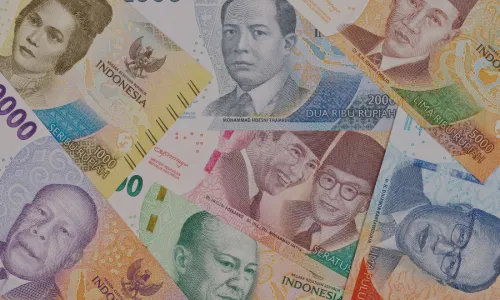
Discover 10 intriguing facts about the Indonesian Rupiah, backed by comprehensive statistics and data. offering a detailed look into this essential aspect of Indonesia's financial system.
.webp)
The New Zealand Dollar, also known as "Kiwi", is a vital component of the world economy. In this post, discover 10 interesting facts about NZD's history, usage and impact on New Zealand society and economy.