

10 facts about the Vanuatu Vatu (VUV)

Our rates

Find branch

FAQs
Vanuatu Vatu (VUV): Facts, Denominations, and AUD to VUV Exchange Tips
The national currency of Vanuatu is the Vatu (VUV), a currency that has served as a symbol of economic sovereignty for this South Pacific archipelago since its independence.
Unlike most modern currencies, the Vatu operates as a single unit without decimal subdivisions, creating a distinct pricing environment for Australian travelers and regional businesses.
Historical origins and the "Stone" legacy
The transition to a national currency was a pivotal moment in Vanuatu’s history, marking its departure from colonial financial systems to an independent monetary framework.
This shift was not only economic but also deeply cultural, reflecting the identity of the Ni-Vanuatu people.
Fact 1: The etymology of "Vatu"
The word Vatu translates literally to "stone" in many indigenous Vanuatuan languages. This name was chosen to reflect the permanence and strength of the nation's volcanic geography and traditional values following independence in 1980.
Fact 2: Independence from the Franc
Introduced in 1982, the Vatu officially replaced the New Hebrides Franc at par. Its introduction also signaled the end of the official circulation of the Australian Dollar as legal tender within the country, although the AUD remains a vital benchmark for the region today.
Fact 3: A non-decimal currency structure
One of the Vatu's most distinctive features is that it has no subunits. While currencies like the AUD are divided into cents, the Vatu is a single-unit currency, with the 1 Vatu coin being the smallest possible denomination.
Navigating the Vatu: Denominations and Usage
Understanding the physical currency is essential for navigating the local economy, which remains heavily reliant on cash transactions. While urban centers are modernizing, the tangible exchange of Vatu remains the primary method of commerce across the islands.
Fact 4: Banknote denominations and series
The Reserve Bank of Vanuatu issues banknotes in values of 200, 500, 1,000, 2,000, 5,000, and 10,000 Vatu. Each note features the national coat of arms and themes related to agriculture, flora, and Ni-Vanuatu culture.
Fact 5: The coinage of the archipelago
The Vatu is supported by a robust coinage system including 1, 2, 5, 10, 20, 50, and 100 Vatu coins. Interestingly, the 100 Vatu coin is similar in size to the Australian and New Zealand dollar coins, though it is noticeably thicker.
Fact 6: The dominance of physical cash
Vanuatu is primarily a cash-driven economy, particularly outside of Port Vila and Luganville. In local markets and outer island villages, the Vatu is often the only accepted medium of exchange for goods and services.
Currency profile: Technical specifications
To assist in financial planning and exchange, the following table provides a high-level overview of the Vatu’s technical characteristics and its regulatory environment.
| Feature | Technical Detail |
| ISO 4217 Code | VUV |
| Local Symbol | Vt |
| Central Bank | Reserve Bank of Vanuatu |
| Smallest Unit | 1 Vatu (No cents) |
| Key Export Impact | Copra, Cocoa, and Kava |
Ready to explore the islands? Reserve your Vanuatu Vatu (VUV) online now to secure competitive rates and 0% commission before you depart.
Security and market stability
The management of the Vatu involves sophisticated security measures and monetary policies designed to protect the currency's value and the nation's financial stability. These elements are crucial for maintaining the integrity of the currency in both domestic and regional markets.
Fact 7: Polymer security technology
To withstand the tropical climate and reduce counterfeiting, Vanuatu transitioned to polymer (plastic) banknotes for its higher denominations.
These notes include advanced features such as transparent windows, holographic images, and tactile marks for the visually impaired.
Fact 8: AUD to VUV exchange dynamics
The Vatu's value is linked to a confidential basket of currencies, with the Australian Dollar (AUD) playing a significant role due to trade and tourism receipts. Shifts in the Australian economy often influence the daily fluctuations of the AUD to VUV cross rate.
Fact 9: Regulatory oversight by the Reserve Bank
The Reserve Bank of Vanuatu (RBV) is solely responsible for issuing and regulating the Vatu. The bank monitors inflation and foreign reserves to ensure the currency supports sustainable growth across the islands.
Fact 10: The "Shilling" and "Pound" nicknames
In some local languages, counting large numbers can be complex, leading to colloquial nicknames for certain values. For example, 10 Vatu is sometimes referred to as a "shilling", while 200 Vatu may be called a "pound".
Table of contents
- Historical origins and the "Stone" legacy
- The etymology of "Vatu"
- Independence from the Franc
- A non-decimal currency structure
- Navigating the Vatu: Denominations and Usage
- Banknote denominations and series
- The coinage of the archipelago
- The dominance of physical cash
- Currency profile: Technical specifications
- Security and market stability
- Polymer security technology
- AUD to VUV exchange dynamics
- Regulatory oversight by the Reserve Bank
- The "Shilling" and "Pound" nicknames
Quick insights: Your top questions about the Vanuatu Vatu (VUV)
Navigating a new currency can be challenging, especially one with a unique non-decimal structure. This section clarifies the most common operational queries for those exchanging Australian Dollars.
While some major resorts and tour operators may accept AUD, it is not official legal tender. Paying in Vatu is the only way to ensure transparent pricing and avoid the high exchange margins often applied by local merchants.
Since there are no subunits, there is no need for cent-based rounding. However, as the 1 and 2 Vatu coins are less common today, some vendors may round the total transaction to the nearest 5 Vatu.
Cards are accepted in the main urban areas of Port Vila, but often attract a 3% to 5% surcharge. It is essential to choose the local VUV option on the terminal to avoid hidden mark-ups from Dynamic Currency Conversion (DCC).
Genuine polymer notes have a distinct plastic feel and feature a clear window with an embossed design that is visible from both sides. They also include a shadow image of the Reserve Bank logo when held up to the light.
In Vanuatu, tipping is not a traditional requirement and prices are typically "all-in". While a small amount of Vatu cash is appreciated for exceptional service, it is not expected as part of standard transactions.
Need to exchange AUD to VUV?
Order your currency online and enjoy 0% commission and the best exchange rates online.
Read about other currencies
.webp)
The euro stands as one of the world's most influential currencies, symbolizing the economic integration and stability of the Eurozone. In this post, discover 10 interesting facts about the euros.
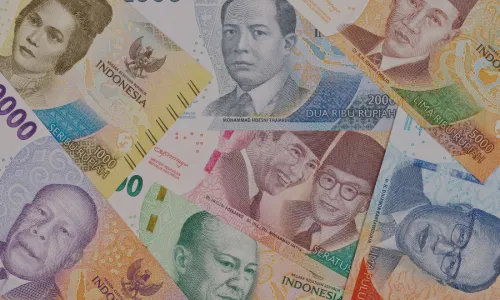
Discover 10 intriguing facts about the Indonesian Rupiah, backed by comprehensive statistics and data. offering a detailed look into this essential aspect of Indonesia's financial system.
.webp)
The New Zealand Dollar, also known as "Kiwi", is a vital component of the world economy. In this post, discover 10 interesting facts about NZD's history, usage and impact on New Zealand society and economy.