Why you should avoid exchanging money at your hotel abroad
Think twice before swapping your Australian Dollars at the front desk. While the convenience of a hotel lobby is tempting after a long flight, the "convenience tax" can take a massive bite out of your holiday budget before you even unpack.
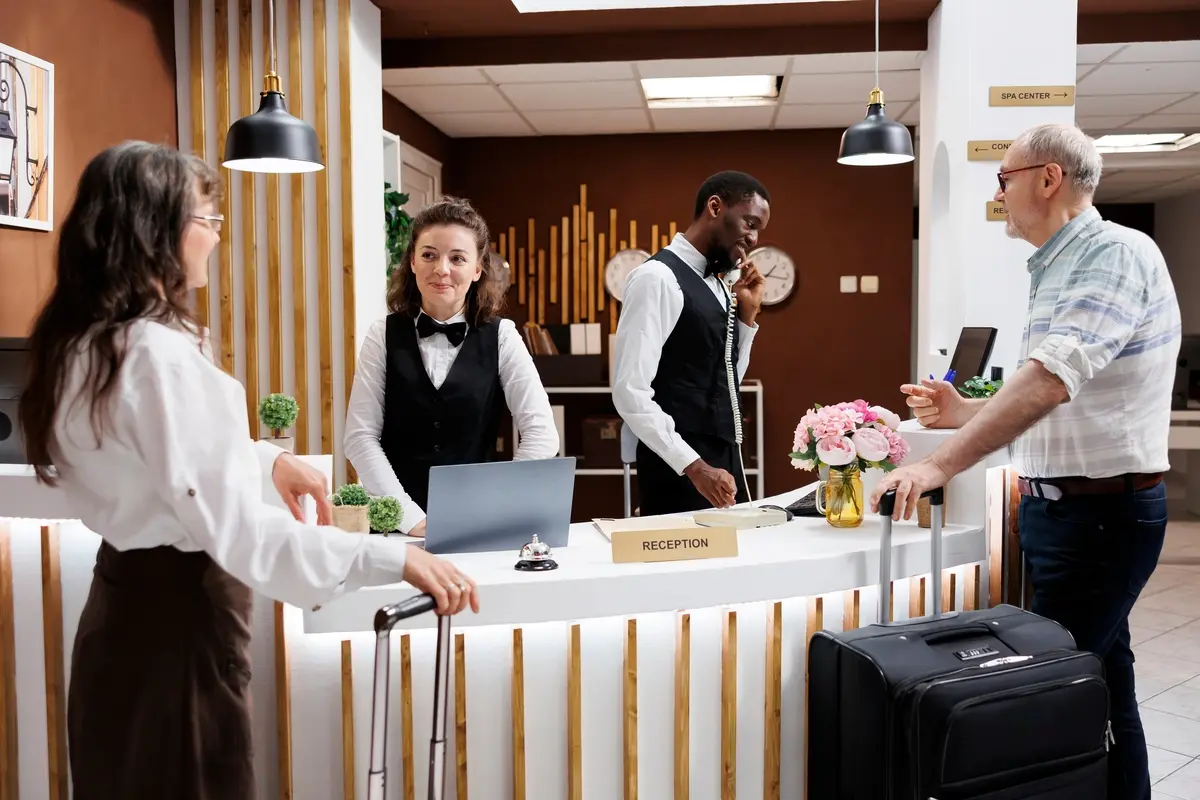
G’day, fellow travelers. We’ve all been there. You’ve just hopped off a grueling long-haul flight, your brain feels exhausted from the jet lag, and you finally shuffle into your hotel lobby. Then, right there next to the bowl of mints at reception, you see the "Currency Exchange" sign. It looks like a bloody lifesaver, doesn't it? No queues, no searching through winding backstreets just hand over your Australian Dollars (AUD) and grab the local cash.
But hold your horses. That "convenience" comes at a price.
While hotel currency exchange may seem like a convenient option after a long journey, it’s important to understand how exchange rates and service margins work. In many cases, the rate offered on-site may differ from other available options. If you’d like more of your travel budget to go towards your experiences, taking a moment to review how lobby exchange services operate can help you make a more informed decision.
The convenience tax is bleeding your budget dry
Hotels aren't banks, and they certainly aren't currency specialists. They don't have the massive infrastructure or the high-volume turnover that a dedicated provider like Prosegur Change operates with.
Exchanging AUD at a hotel reception desk can be convenient, but the rate provided may differ from the prevailing market rate. Depending on the provider, the difference can reach up to 15%.
Feature | Hotel front desk | Dedicated FX specialist |
Exchange rate | Poor (High margins) | Competitive (Market-linked) |
Transparency | Rates hidden in the total | Clear breakdown of costs |
Stock | Limited to small notes | All denominations available |
Expertise | General staff | Currency professionals |
Beyond these rates, there is the issue of limited choice. Most hotels only carry the "big" currencies like USD or Euros. If you are carrying AUD and need something specific like Thai Baht or Japanese Yen, they might not have it at all, or they'll charge an even higher premium to source it for you from a local bank.
Safety and trust beyond the front desk
Dedicated currency exchange providers typically issue detailed receipts and follow established verification procedures for banknotes. While hotels may offer exchange services as an added convenience, currency exchange is not their primary activity, and verification processes can vary depending on the provider.
Travel Tip: If a merchant or hotel offers to charge your Aussie card in AUD, always decline and choose the local currency to avoid expensive conversion markups.
It is always better to be prepared before you reach the check-in desk. By securing your cash at a dedicated branch before you arrive, you ensure that your first night in a new city isn't spent worrying about whether you got ripped off before you even unpacked your bags.
Before you make your next transaction, it is important to clarify some of the most common misconceptions about changing money on the go. Many travelers fall into the trap of believing that "no commission" means a fair deal, or that all exchange points are created equal. Here are the answers to the questions we hear most often from savvy holidaymakers.
Clearing up the common myths
Only in a genuine emergency. If you need twenty bucks for a taxi and the driver won't take card, go for it. Otherwise, save the bulk of your cash for a professional service to avoid unnecessary fees.
Google shows the interbank rate used by banks for massive trades. Hotels add a heavy spread on top of this. Dedicated providers keep this spread much tighter to give you a fairer deal for your AUD.
Usually, yes. Even with "0% Commission," they simply bake their profit into a much worse exchange rate. You aren't saving money; the fee is just hidden in the math of the conversion.
A hotel is safer than an unregulated hole-in-the-wall, but neither beats a regulated, professional currency exchange brand located in a major airport or shopping hub where security is a priority.
Exchange the absolute minimum—just enough for a meal or transport. Wait until the next morning to find a specialist branch where your Australian Dollars will go much further.
Planning your next getaway? Don't let your holiday budget shrink before you've even left the lobby.


.webp "What Should You Do With Foreign Currency Left Over After a Trip?")
.webp "Supporters: where to get the best exchange rate before a trip to North America")