

Buy Euros Online – AUD to EUR Exchange

Our rates

Find branch

FAQs

Buy euros online before travelling to Europe
Order your euros online, pay when you collect from a Prosegur Change branch, and pay 0% commission on the exchange. It's the simplest way to land in Paris, Rome or Athens with cash ready for the train into town, a first espresso standing at the bar and the hotel tourist tax.
Most Australians visit several European countries in one trip, and money works differently from one to the next. In the Netherlands, Finland or the Baltic states you can go days without touching cash. In Germany, Austria, southern Italy or the Greek islands, plenty of bakeries, family restaurants and beach kiosks still prefer notes and coins. A mix of euro cash and a card that doesn't charge foreign fees covers both.
Europe Currency Options
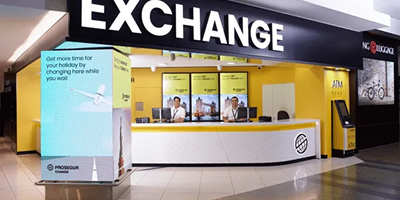
Cash
- Reserve online, pay & pickup at a branch
- Get our best exchange rates online
- 0% commission
- Collection available from the next day

Travel Money Card
- Pay online, in-store & use ATMs worldwide
- No fees on purchases abroad
- 10 currencies available
- 100% secured by Mastercard
Europe currency at a glance
|
|
|---|---|
|
Name |
Euro |
|
ISO Code |
EUR |
|
Symbol |
€ |
|
Notes |
€5, €10, €20, €50, €100, €200, €500 |
|
Coins |
1 cent, 2 cent, 5 cent, 10 cent, 20 cent, 50 cent, €1, €2 |
|
|
|---|---|
|
Cash Index |
40% on average. It's closer to 10% in the Netherlands or Finland, and much higher in Germany, southern Italy and the Greek islands. |
|
Other currencies accepted |
None. |
|
Tips |
Tipping practices vary across euro countries, but in much of Western Europe, service is included in the price and an extra tip is not normally expected. |
Everyday prices in Paris

Cappuccino
€4.60

The Louvre
€32 for non-EU visitors

Metro ticket
€2.50

Dinner, mid-range
€35 per person
Where the euro is used, and where it isn't
The euro is the currency of 21 EU countries. Bulgaria became the newest member on 1 January 2026, after Croatia in 2023. It's also used in Monaco, San Marino, Vatican City, Andorra, Montenegro and Kosovo.
Several popular European destinations don't use it, which catches many travellers out. Switzerland uses the Swiss franc, the UK the pound, and the Czech Republic, Hungary, Poland, Denmark, Sweden, Norway, Iceland and Romania all have their own currencies. In those countries, some tourist businesses accept euros, but usually at a poor rate, and your change comes back in local currency. If your itinerary crosses into one of them, plan for it separately. Our list of currencies shows what we stock.


The best place to buy euros in Australia
The best place is the one that gives you the most euros for your Australian dollars once every fee is counted, at a time and place that suits your trip. In practice, that rules out exchanging at the departure gate or at your arrival airport in Europe, where kiosks have the weakest rates. Ordering online lets you check the full amount you'll receive before you commit.
With Prosegur Change, you reserve your euros on our currency order page, pay 0% commission and pay only when you collect. Pick up at Melbourne Airport or Brisbane Airport on your way to the gate, or earlier in the week at one of our city and shopping-centre branches, such as Sydney, Bondi Junction, Melbourne, Carindale, Adelaide or Karrinyup. Find the one nearest you on our branch finder, and check today's EUR rate on our exchange rates page.
What you'll pay in cash in Europe
A few costs come up on almost every European trip. Many cities charge a tourist tax per person per night, added to your hotel bill. In Italy in particular, it's often collected at the property on arrival or departure, sometimes in cash only. Public toilets at train stations and motorway stops often cost 50 cents to €1. Markets, gelaterias, small bakeries and taxis outside the big cities are the other usual cash moments.
For a three-week trip paying hotels and most meals by card, many couples find €400 to €600 in cash is about right. If you're spending time in Germany, the south of Italy or the islands, lean towards the upper end.

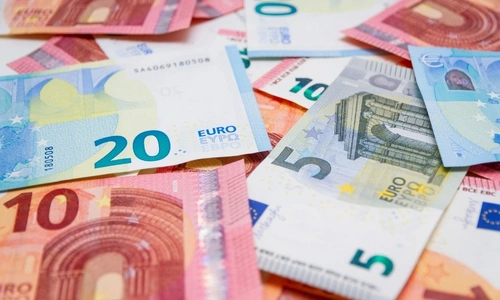
Euro notes and coins
Euro banknotes come in €5, €10, €20, €50, €100 and €200. They're identical in every country. The €500 note is no longer issued but remains legal tender, though few shops will take it. Coins are 1c, 2c, 5c, 10c, 20c, 50c, €1 and €2. Each country mints its own design on one side, and every coin can be spent anywhere in the euro area.
In Finland, the Netherlands, Belgium, Ireland and a few other countries, cash totals are rounded to the nearest 5 cents, so 1c and 2c coins hardly circulate. In practice, €50 is the largest note to carry: small shops and kiosks often refuse €100 and €200 notes for small purchases.
Travel Money Card and eSIM for Europe
Euros are one of the 10 currencies on our Travel Money Card. Load them before you go to lock in the rate on that first load, then pay anywhere Mastercard is accepted. If your trip also takes in London, the same card can hold British pounds. When you pay by card, always choose to be charged in euros rather than Australian dollars. For data across borders, our international eSIM offers a Europe plan that works in multiple countries.


Leftover euros
The euro is one of the easiest currencies to hold on to between trips. If you'd rather have Australian dollars back, you can sell your euros at any of our branches. Flying via Asia? You can add Singapore dollars or Thai baht to the same order for your stopover.
New entry rules for Europe in 2026
The EU's Entry/Exit System (EES) is gradually replacing passport stamps with fingerprints and a facial photo, recorded at your first entry into the Schengen area. Allow extra time at border control on your first entry. ETIAS, a travel authorisation for visa-exempt travellers such as Australians, is due to start in the last quarter of 2026. It will cost €20 and be valid for up to three years. Check the official EU website before booking, as the date has already moved several times.
Travelling soon?
Here's how to easily reserve your currencies online
 1. Choose your currency
Determine the amount of travel money you will need to enjoy your trip.
 2. Choose a date & a pick-up location
Collect your order from one of our exchange bureaus at major airports and city centre.
 3. Collect & pay
Pay upon pickup and enjoy
your trip.
FAQs about buying euros
The best place is the one that gives you the highest total number of euros after fees, without forcing you to buy at the airport on the day. Ordering online with Prosegur Change, with 0% commission and payment on pickup, lets you see that total before you commit.
Sometimes, in tourist shops and some restaurants, but at an unfavourable rate and with change in local currency. Switzerland uses the Swiss franc and the Czech Republic the koruna. It's better to pay by card or get local currency.
Yes. A coin minted in Spain is valid in Germany, Greece or Finland. Only the national side differs.
You must declare €10,000 or more in cash, or the equivalent in other currencies, when entering or leaving the EU. Some countries also limit the size of cash payments for purchases, so large amounts are best paid by card.
It varies by country, but it's much more modest than in the US. Rounding up or leaving 5 to 10% for good table service is common in France, Italy, Spain and Germany. In Italy, a « coperto » cover charge already appears on many restaurant bills.